


Southeast Asian Countries Bond in Tourism Mode in the Philippines at the 2026 ASEAN Tourism Forum with the theme “Navigating Our Tourism Future, Together”
ATF—a conference and travel trade show that is all about Southeast Asia’s sustainable and interconnected tourism future.

In a speech delivered by Philippine Tourism Secretary Christina Garcia Frasco, Philippine President Ferdinand Marcos Jr. opened the 45th Association of Southeast Asian Nations (ASEAN) Tourism Forum (ATF) 2026 in Cebu, reaffirming the Philippines’ commitment to advancing sustainable, inclusive, and innovative tourism as a key driver of regional growth and cooperation. The Philippine President also underscored the crucial role of the tourism sector as a “driver of opportunity for economies and communities.” The Philippines opened the ATF 2026 under the theme “Navigating Our Tourism Future, Together,” marking a key milestone of its ASEAN chairship.
This conference and travel trade show is all about Southeast Asia’s sustainable and interconnected tourism future. Since its inauguration in 1981, the annual ATF rotates alphabetically through its 11 member-countries with a total of 700 million people—Brunei, Cambodia, Indonesia, Laos, Malaysia, Myanmar, Philippines, Singapore, Thailand, Timor-Leste, and Vietnam. The tourism fusion of Southeast Asia’s 11 countries and their amazingly varied cultures poses several challenges, one of which is its diversity. ASEAN members range from wealthy Singapore and Brunei to agrarian Laos and Cambodia. Politics also run the spectrum, from the democratic Philippines, which is largely Christian, to Indonesia, which encompasses the world’s largest Muslim population—and, for now, a difficult to access Myanmar. 2026 is the first year that Timor-Leste was represented at ATF.
The 45th annual ATF was held in Cebu City, Philippines, from January 28–30, 2026. It made a lasting impression on its delegates at the Mactan Expo Center in Lapu-Lapu City with a sea of colorful pavilions. ATF brings together a dynamic mix of ASEAN Tourism Ministers, National Tourism Organisations (NTOs), senior officials, TRAVEX exhibitors, international buyers, and media. International buyers (275), sellers (125), exhibitors (360) and nearly 100 media were represented from 50 countries and fused the intentions of this regional travel-trade industry. There were also dozens of official sessions, functions, and celebrations at fabulous local hotels. During the conference, I stayed at the gorgeous oceanfront Reef Island Resort on Mactan Island.
ATF 2026 Media Updates
A highlight of ATF 2026 were the National Tourism Organisation (NTO) briefings. These sessions featured updates and presentations from ASEAN member states, including Timor-Leste, the region’s newest member. The press conference-style media briefings led by tourism ministers from member countries created buzz about plans for a single or no-visa policy for the entire region, as this visa-free tourism strategy will help create an ideal single destination. Here is a breakdown of the tourism minister’s announcements:
The PHILIPPINES’ Love the Philippines campaign helps reprove that, as usual, it’s more fun there! There was a nine-percent increase in international arrivals from 2024 to 2025. The tourism department is focused on expanding air connectivity as well as health and wellness tourism. Film tourism is also in the lineup for enhancement. The government has recently opened 12 attractive rest areas nationwide with many more coming. I visited the tourist rest area in Carcar and it was fabulous. There is also an enthusiastic initiative that celebrates Muslim-friendly destinations. The Department of Tourism (DOT) and the Tourism Promotions Board (TPB) were thrilled to re-announce the updated and enhanced Travel Philippines app. The free TRAVELPH app is a game changer. The Philippines’ 7,600 islands share some form of American-influenced musical, religious, and Hollywood traditions. The U.S. remains its second largest market, the first being South Korea—one out of four tourists here are South Korean. I’ve enjoyed Philippine Airlines’ direct flight from New York (JFK) to Manila (via Vancouver).
The wildly successful MALAYSIA Truly Asia campaign continues to showcase the best of its mixed native, Malay, Chinese, and Indian heritage. In 2025, the country welcomed 42 million international visitors, an eleven-percent increase from 2024. The travel trends for 2026 are authenticity, regional growth, personalized tech, sustainability, and quality spending. At the 2025 ATF, I asked the Director General of Tourism Malaysia, Datuk Manoharan Periasamy, if there any plans to change that slogan and he humorously replied, “We can have only one wife!” The digital arrival card for foreign visitors continues to be enhanced. Product development ideas include niche sports, hipster, wedding, food, and health & wellness. Kuala Lumpur has direct airline connections to 80 destinations with Air Asia being one of its busiest airline players in this region. Here, there is a festival for every occasion—and an occasion for every festival!
VIETNAM announced its new and favorable 90-day multi-entry e-visa. The country welcomed 121 international tourists in 2025. The Vietnam Timeless Charm promotion helped inspire visitors in 2025, with South Korea as the international visitor frontrunner. Vietnam remains one of the world’s 10 fastest growing travel markets, and doing so with a continued focus on security. The popular yet hard-to-reach Northern Highlands of Vietnam are now more accessible thanks to a new road from Hanoi to Sapa that halves the travel time between Hanoi and Lao Cai to only 3.5 hours. Vietnam continues its end-of-war celebrations, some focusing on US veterans returning in unity and vacation mode.
SINGAPORE’s Passion Made Possible campaign continues to drive an elevated brand of marketing that drew 15.5 million international visitors in 2025 who had an average stay of 3.5 days and spent 16 billion Singapore dollars. Their plan is to capture more transit and transfer passengers. Its top three visitor arrival markets in 2025 were China, Indonesia, and Malaysia. The USA ranked seventh in this category with 645,000 arrivals. Singapore continues to drive tourism demand with a vibrant and robust events calendar. One of the country’s most ambitious projects is a hi-speed railway link to Kuala Lumpur, with an aim to eventually extend through Thailand to China. Tourists continue flocking to their enduring offerings, including the National Gallery and Chinatown Street Market.
Wonderful INDONESIA attracted 14 million international visitors in 2025 (a return to pre-covid levels) as well as having one billion internal tourist movements. Malaysia leads the way in international arrivals. The flagship tourism program for 2026 is Quality Tourism with themed packages including gastronomy (“Mother of Spices”), wellness that goes beyond spas, textiles, art, marine, and design. The country continues to drive a clean tourism movement and strives to make the country’s culinary delights known worldwide. Cruising Indonesia’s huge archipelagos is becoming more popular, exposing the country’s beautiful coastline outside of Bali, which is largely the only destination most Americans visit. Indonesia’s Sumatra Island–particulary West Sumatra—is often also overshadowed by Bali, making it perhaps one of the best kept secrets in Southeast Asia.
The vision of the CAMBODIA’s Kingdom of Wonder campaign continues to attract visitors from every corner of the globe with more than two million arrivals by air in 2025. The country is promoting its annual May-October “Green Season.” June 2026 is the International Day of Yoga. The top-two Southeast Asian international arrivals in 2025 were by its neighbors Vietnam and Laos. Discussions continue on building a new road to Angkor Wat. The dispute is that it would increase the number of day trips and cut down on overnight stays in Siem Reap, which would weaken the economy and potentially degrade the ruins. Cambodia once partnered with Thailand for a single visa option—hopefully that will return soon.
LAOS: Laos Simply Beautiful campaign continues to strive for and celebrate inclusive tourism in a unified Southeast Asia. The country also strives to be an epicenter of peace. Laos continues to improve its transportation connectivity with 102 entry checkpoints. Once again, China, Thailand, and Korea top its list of international visitors in 2025. Lao tourism recertified its country’s commitment to improving the roads and transportation infrastructure, allowing tourists to move easily throughout the country without flying. A recently completed modern highway and high-speed railway (10 Stations in Laos; 4 in China) have simplified traveling here in a big way. Luang Prabang continues to be one of the main draws for western travelers, and Laos has successfully evolved places like Vang Vieng from backpacker hangouts to more upscale destinations. The future looks bright for “Jewel of the Mekong.” Ps, I’ve explored 150 countries. The ultra-mellow Lao people might be the kindest, most hospitable, and genuine humans on Earth.
Timor-Leste opens a new chapter in the ASEAN Tourism Forum as its eleventh member. Its tourism goal is transforming from aspiration to inspiration. The currency is US dollars and centavo coins, so there is no currency exchange risk.
The MYANMAR Be Enchanted campaign continues to claim that specific, safe tourist destinations still exist—which is hopefully and probably true. Its plan is to develop a more resilient, balanced, responsible, and sustainable tourism sector. Myanmar remains the land of (at least monthly) festivals. In 2015, ATF was held in Myanmar for the first time. The tourism minister identified tourism as one of its top-five priority sectors with a promising growth rate. The country is working to improve transit, road conditions, and flight options. I can testify that the online tourist e-visa (evisa.moip.gov.mm $50) and business visa on arrival ($40) both work.
Amazing THAILAND continues taking large strides toward increasing overland travel and sustainable development. In 2025, the top five international visitors were from China, Malaysia, India, South Korea, and Russia. The US has slipped out of the top five. Thailand welcomed over 30 million international arrivals which generated revenue of 1.8 trillion Baht (35-percent of those arrivals come from ASEAN countries). Part of its brand is the exotic culture of service that welcomes all. Thailand forecasts $90 billion in U.S. tourism spending in 2026. Along with being the region’s ASEAN highway interconnecting the region via marine, rail, air and road, Thailand continues setting the example for tourism in Southeast Asia with growing health and wellness sectors.
BRUNEI did not participate in ATF 2026. Its Adobe of Peace campaign has been a success. The last Malay Kingdom celebrates its options to play golf or polo, dive, or relax in a plush resort. While under 10,000 Americans visit Brunei each year, it is rich in rainforest and mountain terrain (especially in neighboring Borneo) that could be very attractive to adventure travelers.
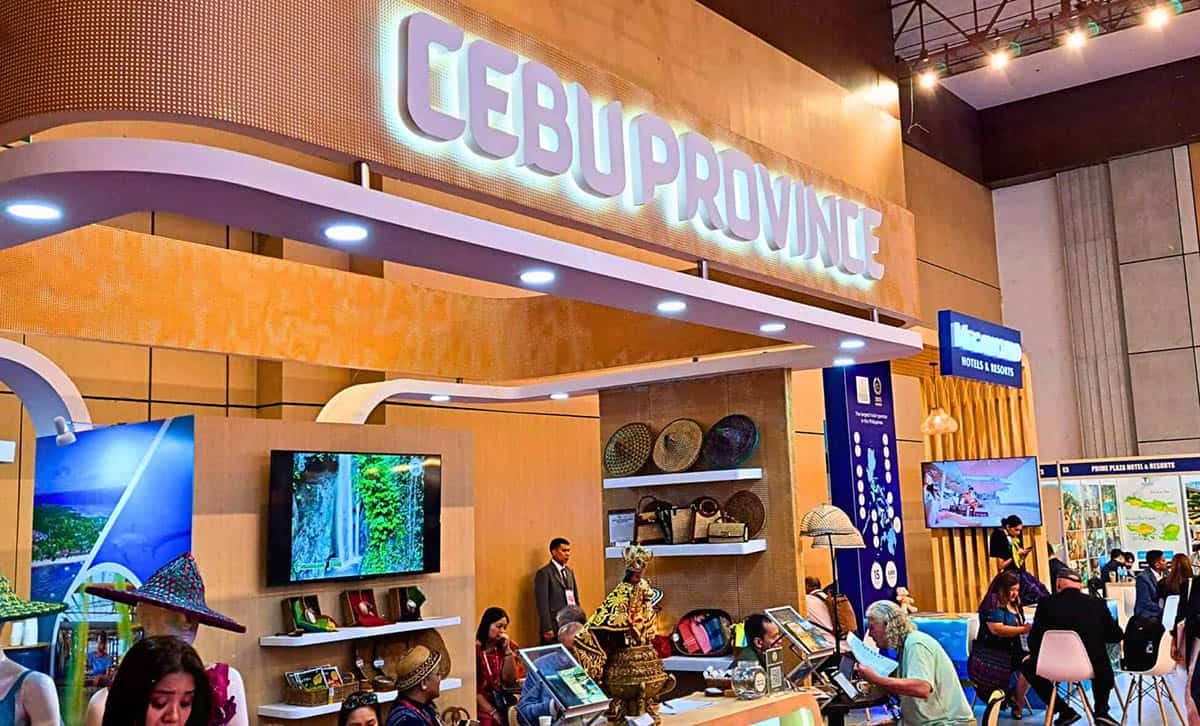
*For more information and tourism statistics visit ATF Philippines. ATF 2027 will be held in Singapore in January 2027 and themed as “Transforming Tourism, Empowering Tomorrow.” ATF will continue to weave connections among Southeast Asia’s 11 diverse countries. ATF delegates were offered several post-conference tour options throughout the Philippines.

MORE ABOUT ATF
In terms of tourism, Southeast Asia holds vast potential as one sustainable community. The idea of the whole being greater than the sum of its parts is not lost on this region. The Association of Southeast Asian Nations (ASEAN) is an organization comparable to the European Union with its enduring effort to achieve regional solidarity. This forum is ultra-focused on how its member countries can work together to market themselves as one destination.
ASEAN cohesion emphasizes partnerships rather than competition. A single market free-trade agreement is another goal of the association. Until December 2008, the 45-year-old organization had no written constitution. The new charter sets a goal for establishing economic integration via a 10-country free-trade zone and established commitments respecting human rights, democratic principles, and keeping the region free of nuclear weapons. Binding the 10 members to an enhanced legal framework, the regional charter sets out their shared aims and methods of working together.